
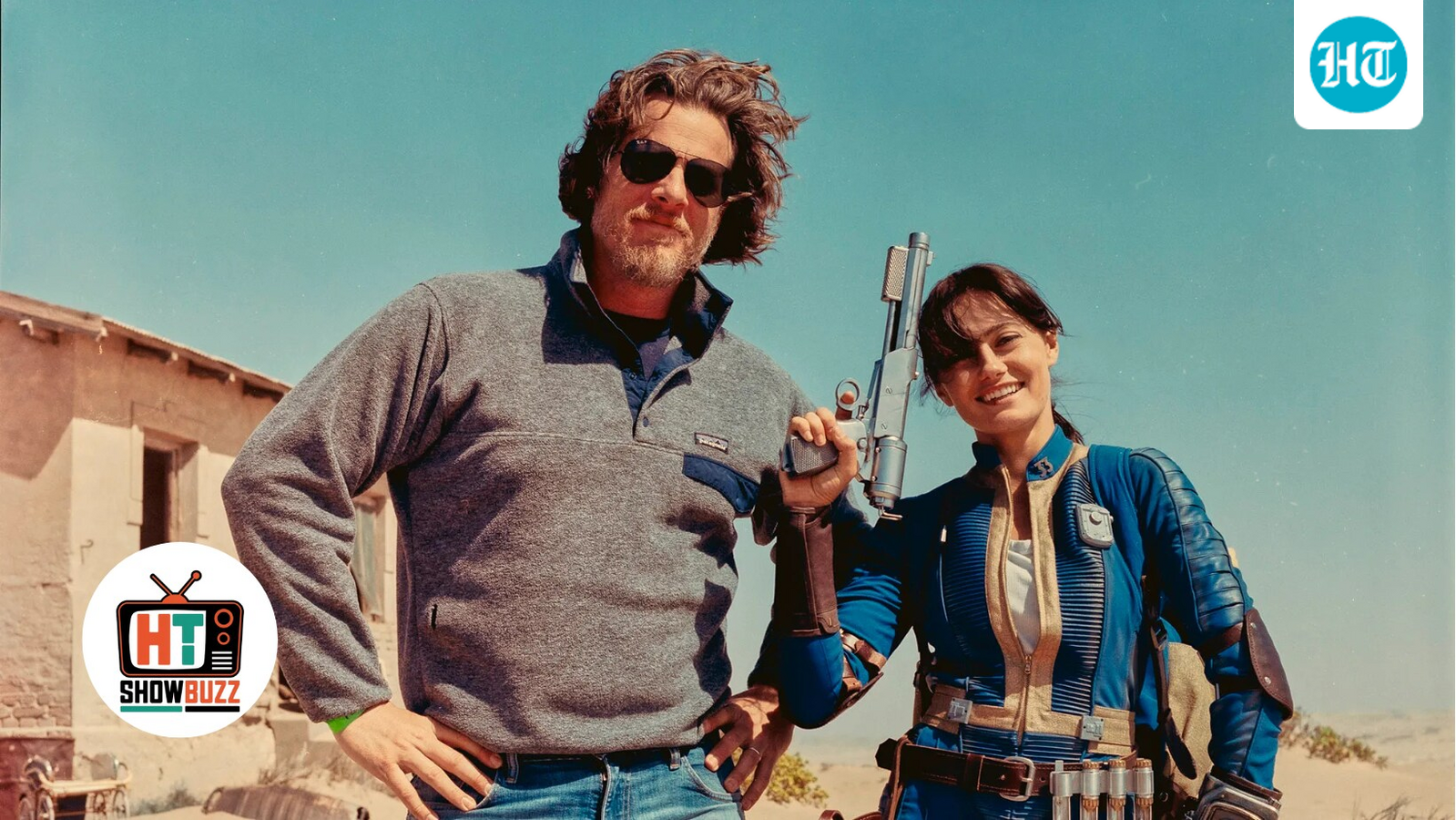
In a storied career, Jonathan Nolan has adapted some of the most iconic pop culture stories, created original universes, and given us some memorable TV shows and films. His legacy of successfully adapting the ‘un-adaptable’ titles has continued with Fallout, the Prime Video series based on the popular video game franchise. The writer-filmmaker was recently in Tokyo for the Asian premiere of Fallout season 2, where he sat down with HT for a chat about the show, taking in fan feedback, and ‘tuning out the noise’. Excerpts

How do you adapt something like Fallout? Because it’s a beloved game with such lore, such intricate lore, how do you balance between fidelity to the source material and making it your own and making it more engaging for a wider audience?
Very carefully, I think, would be the first answer. But the reason we’re doing this project in the first place is that I love these games. That’s really where it comes from. For me, it comes from a deep love of these games. But also, one of the reasons it was so exciting to me is that each game in the Fallout series has a new set of characters, has a new story essentially. They are all connected to this larger universe, but every game is a new opportunity to tell a new story within that. And so from our perspective, in television, there couldn’t be anything more exciting. Here, you have an absolutely fascinating, larger story being told, but you also have the opportunity to tell a new story within it.
How does feedback shape storytelling when you develop something? Because the feedback to season one was phenomenal. I hope that’s how it stays with Season Two. But, when feedback comes from gaming fans, from viewers at large, does that influence your writing, your creation of season two in any way?
One of the things I love about television is it’s such a vast canvas. There’s such a large story that you’re telling that you cannot know all the answers when you begin a journey. You’re going to start working with actors. There’s gonna be an opportunity to work with an actor you didn’t anticipate. You’re gonna get fascinated with a character that for you. So, you cannot have this kind of rigid idea of, ‘Here’s exactly how we’re going to do it.’ And anyone who says that of a series is just lying. The principal fun of television is that, along the way, you get interested in this character.

That said, I think you have to have a game plan from the beginning, and I think you have to be driven by your convictions. This is something I learned on the Batman movies (The Dark Knight trilogy) that I worked on with my brother (Christopher Nolan) for the better part of a decade. Sometimes you can tune out the noise, and sometimes you can’t. We were told when Chris cast Heath Ledger that we had destroyed the franchise forever. I have never forgotten the lesson there was: if you approach these things with love and respect and you have the courage of your own creative choices, I think that will ultimately win out.
And so the lesson we learned with those projects was to try as much as possible, with all due respect and love for the fans, not to just be reacting all the time.
But the reaction has only heightened with the advent of social media, because now the feedback is just instantaneous and exponentially larger…
But it’s also incentivised incorrectly. I think all of us are considering the broader societal implications of these social networks serving as the heuristics for the way they are designed. They dictate the result to the loudest voices in the room, right? Those loudest voices, often these days, aren’t even human voices. So I think if it was important 10 years ago to be careful with the fans, it’s even harder to filter the noise now.
You say you can compartmentalise that and keep yourself out, but the larger fan base doesn’t seem to be able to. For instance with The Last of Us, another video game adaptation with an acclaimed season, the second season was divisive, with social media leading the criticism.. So how do you not be very of the narrative that builds up due to social media backlash, when you’re making something that is so guarded by the fans and the internet?
I think you have to be very careful. And I know Craig (Mazin, creator of The Last of Us) very well and Neil (Druckmann, writer) a little bit, and I think their show is brilliant and beautiful and beautifully made. It was very nice to be able to release Fallout in the afterglow of The Last of Us, when gaming fans and the community at large said, “Oh, wow, you can make a terrific series based on a game.”
So, I have great, very warm feelings towards that show and the people who make it. I think it’s a terrific show, but I think you have to be, obviously, you know, you have to be somewhat aware of the effects the story you’re telling has. However, I believe storytelling is a deeply personal thing. Everyone knows when they’re watching something, and it’s been voted on by committee. What’s essential is that as a core creative team, you have to be a little fearless to really stick to the things that you think are essential to the story that you’re telling, particularly when it is something like Fallout.
About Fallout season 2
Fallout season 2 brings back the original cast of Ella Purnell, Aaron Moten, Kyle MacLachlan, Moisés Arias, Xelia Mendes-Jones, and Walton Goggins. The first episode will premiere on Prime Video on December 17, 2025, with the remaining episodes released weekly through February 4, 2026.